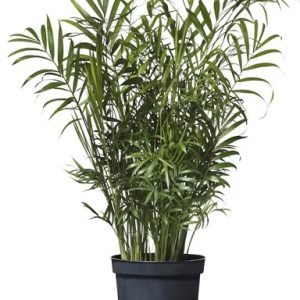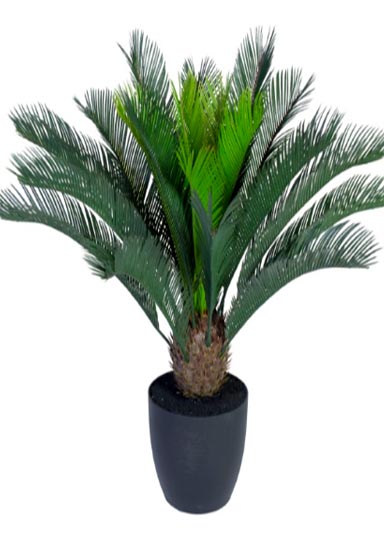
Sago Palm
Scientific Name :Cycas revoluta Family :Cycadaceae
Common Names: Sago Palm, Japanese Sago Palm, King Sago Palm.
These names highlight the plant’s ornamental value, especially given its palm-like appearance, even though it actually belongs to the cycad family and is not a true palm.
The Sago Palm is considered a unique and elegant choice for interior decoration. Despite its slow growth, its appearance…
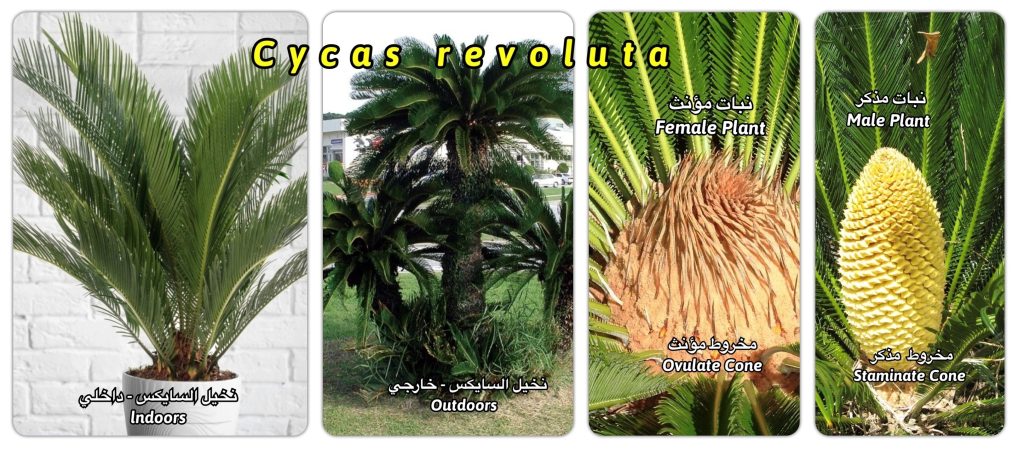
1– Aesthetic and Decorative Features of the Sago Palm
The Sago Palm is considered one of the well-known ornamental plants thanks to its elegance and uniquely sculptural appearance. It is used both indoors and outdoors to add a tropical and timeless character to any space where it is placed.
Symmetry:
Its glossy, feather-like fronds grow in a rosette from a woody trunk with perfect symmetry, making it suitable for formal settings.
Tropical ambience:
It adds a touch of exotic, tropical beauty to gardens, balconies, and interior spaces.
Versatility:
It can be grown in pots for balconies and entryways, or planted in gardens for a distinctive decorative effect.
Longevity:
Its slow growth ensures that it retains its ornamental form for years with minimal care.
Sago Palm in Interior Design
Aesthetic appeal:
Its shiny, feather-shaped fronds growing in a symmetrical pattern add a tropical and sculptural touch to interior décor.
Compact size:
The plant remains relatively small indoors, making it ideal for small spaces, tabletops, or floor displays.
Indoor spaces:
It creates an attractive focal point in living rooms, offices, or reception areas.
Outdoor gardens:
It is used along garden borders, in rock gardens, or as a centerpiece in decorative pots.
Air purification:
Like many foliage ornamental plants, it contributes to improving indoor air quality by absorbing toxins and releasing oxygen.