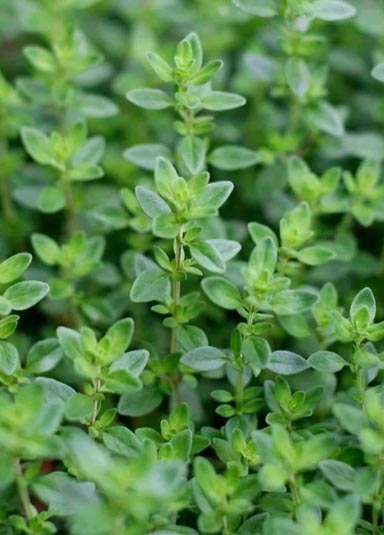
Common Thyme (Za’ater)
Scientific Name: Thymus vulgaris
Family: Lamiaceae (Mint Family)
Common thyme (Thymus vulgaris) is a perennial aromatic herb with a woody stem that naturally grows in warm and temperate regions of the Mediterranean. It is widely valued for its diverse culinary uses, numerous health benefits, and various traditional applications.
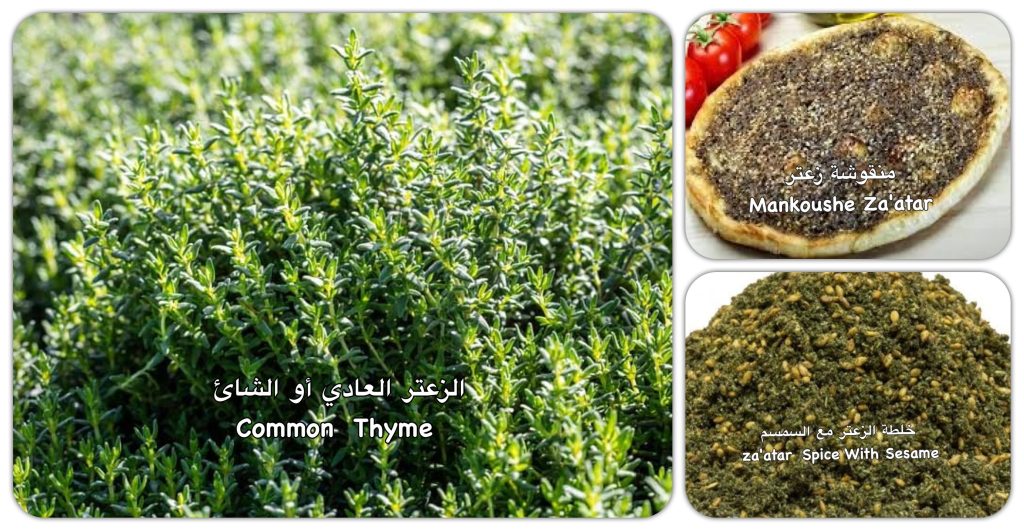
1- Health and Medicinal Benefits
Thyme is used in traditional medicine as a treatment for a wide range of ailments.
• It has antibacterial and antifungal properties, making it useful in treating many types of infections.
• It helps relieve pain and inflammation in joints and muscles.
• It may have a calming effect on the nervous system and improve digestion.
• It is used as a natural disinfectant and deodorizer.
• Thyme oil is used in perfumes, cleaning products, cosmetics, and skin and hair care products.
Culinary Uses
Thyme is an herb used in a wide variety of dishes and cuisines across different cultures.
• Spices and seasonings: Dried or fresh thyme is used as a spice to add a distinct flavor to dishes such as soups, stews, and sauces.
• Bread: Thyme is used in preparing different types of bread, such as thyme bread and pastries.
• Grilled dishes: Fresh or dried thyme is added to marinades for vegetables, meat, chicken, and grilled fish to enhance flavor.
• Sauces and pickles: Thyme is added to tomato sauces to elevate the taste. It can also be used in preparing pickles, adding a fragrant flavor to pickled vegetables.
• Salads: Fresh or dried thyme is added to salads such as fattoush and tabbouleh to give a unique flavor.
• Tea and beverages: Thyme tea can be prepared by boiling fresh or dried leaves. It is a soothing drink believed to help calm the respiratory and digestive systems.
• Nutritional benefits: In addition to its flavor, thyme contains antioxidants, vitamins, and minerals such as vitamin C, vitamin A, iron, and calcium, making it a healthy addition to food.
More… Description and plant characteristics – aromatic compounds.